

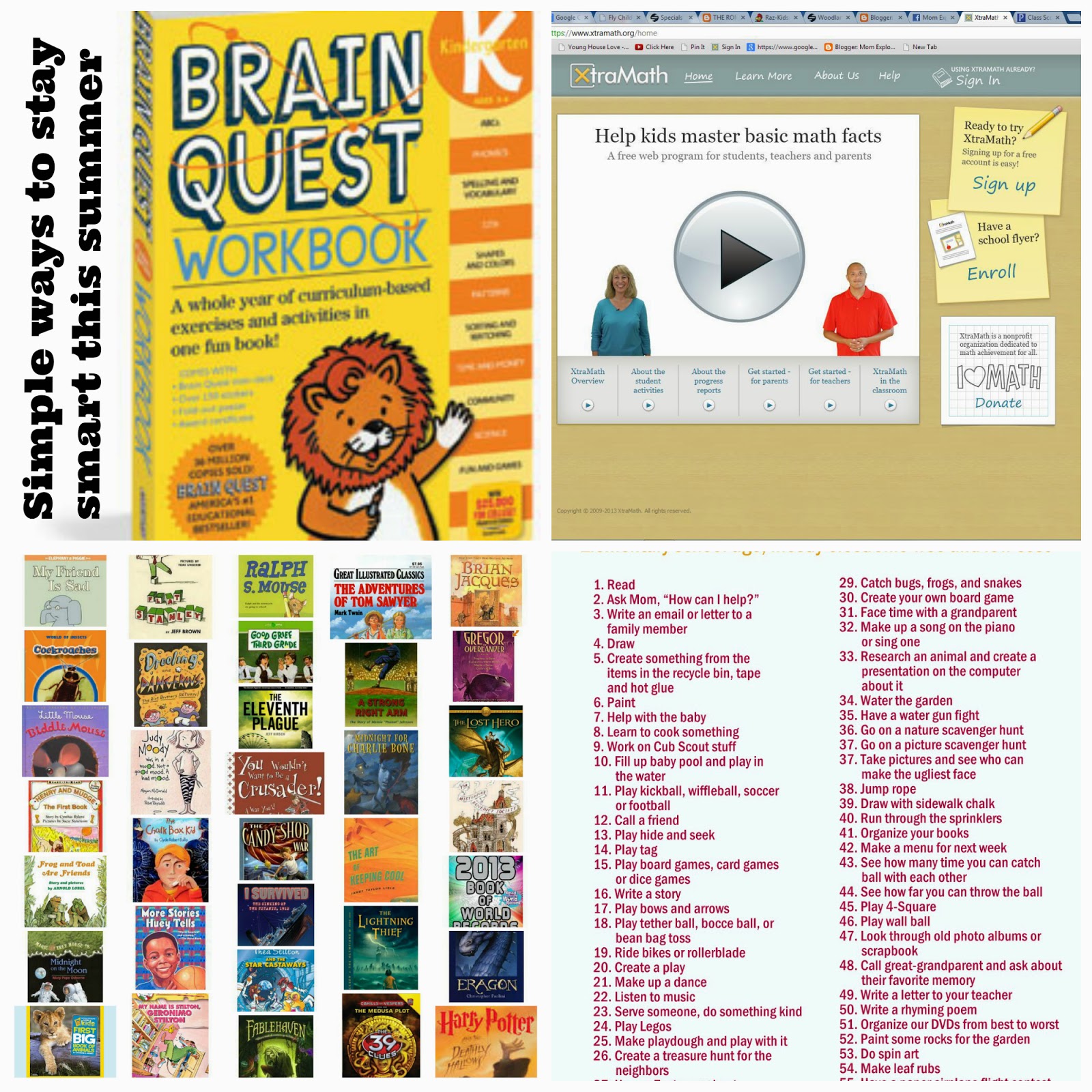
Summer Learning: Our Simple Stay-Smart Summer Schedule
We love using summer to explore new places, enjoy lazy mornings, and slow down — but I also build in a little summer learning so my kids do not lose everything they worked for all year. Kids commonly slip backward academically over a long break (often called the “summer slide”), and a few small, daily habits go a long way toward preventing it. Here is our light, flexible summer learning schedule and the simple ways we stay smart without turning summer into school.
Why We Make Time for Summer Learning
My goal with summer learning is not intensity — it is consistency. We have plenty of free time, so I do not mind asking my kids to do a few short academic things most days. The key is keeping it flexible: some days we get through everything, some days none of it happens, and that is completely fine. A little momentum is the whole point.
Our Simple Summer Learning Schedule
- Workbooks. A grade-level workbook with a small daily page goal or a set amount of time.
- Math facts. A quick 10-minute round of math-fact practice keeps skills sharp.
- Reading. Daily independent reading time, plus frequent library trips.
- Read-alouds. A family book we read together and talk about.
- Piano and typing. Summer is the perfect low-excuse window to practice both.
A Family Project for Summer Learning
My favorite piece of our summer learning is a single big family project we chip away at all summer. One year it was placing all the U.S. states and capitals on a dry-erase map; another year we moved on to the countries of the world. Other options we have considered: the order of the U.S. presidents, the periodic table, the constitutional amendments, poetry memorization, or the bones in the body. These projects are challenging, kind of fun, and they pay off when the same material shows up later in school. I add each task to a simple chart so the kids can check things off — and there is still endless time left for pools, friends, and vacations.
Related Reading
- books that will get your kids into reading
- 150 ways to fight “I’m bored” this summer
- family games we love
Frequently Asked Questions: Summer Learning
How do I prevent the summer slide?
Build in small, daily summer learning: a little reading, some math-fact practice, and a short workbook page most days. Consistency matters far more than intensity — ten to twenty focused minutes a day keeps skills from slipping.
How much learning should kids do over the summer?
Keep it light and flexible — a few short academic tasks most days is plenty. Some days you will get through all of it and some days none, and that is fine. The goal is to keep momentum, not to recreate a school day.
What are good summer learning activities?
Grade-level workbooks, quick math-fact practice, daily reading and family read-alouds, piano and typing practice, and one ongoing memorization project like the states and capitals or the countries of the world.
How do I keep kids learning without a daily fight?
Keep each task short, tie it to the natural rhythm of the day, and make it a predictable routine rather than a surprise. A simple checklist the kids mark off themselves gives them ownership and cuts down on the nagging.




Thanks Brooke! This is awesome 🙂
Thanks Julie! Hopefully it will be useful as Max keeps growing!